For most of the last decade, the EV charging industry has operated on a quiet assumption: passenger EVs and commercial fleets live in different worlds. Different drivers, different corridors, different use cases. You build for one or you build for the other, and you keep them separated.
That assumption is breaking. It is breaking faster than most people in this industry want to admit, and the networks that don’t adjust are going to spend the next ten years retrofitting sites that should have been designed right the first time.
How we got here
The myth of separate worlds made sense when it was written. Commercial fleets charged at depots overnight. Passenger EVs used public infrastructure on long trips. The two populations rarely overlapped, the capital stacks were completely different, and the hardware was optimized for different duty cycles. Nobody sat down and planned it this way. It was just the path of least resistance for an industry trying to grow in two directions at once.
Electric Class 8 trucks have rewritten that math. Battery capacities are large enough that depot-only models don’t hold on long-haul routes. Federal hours-of-service rules already dictate where and when professional drivers stop, and the places they stop are not private depots. They are public corridors, and those corridors are the same corridors that passenger EV drivers travel every weekend.
I have been watching this shift up close. Rangeway is engaged in active conversations on freight corridor electrification with shippers, carriers, and the alliance groups coordinating the rollout. I can’t share specifics on processes that are still active, but I will say this: the serious work happening right now on freight corridors is not something a passenger-only charging network can watch from the sidelines. The traffic is converging. The question is not whether a corridor site will serve both. The question is whether the operator thought about it before pouring concrete.
What actually changes when the worlds merge
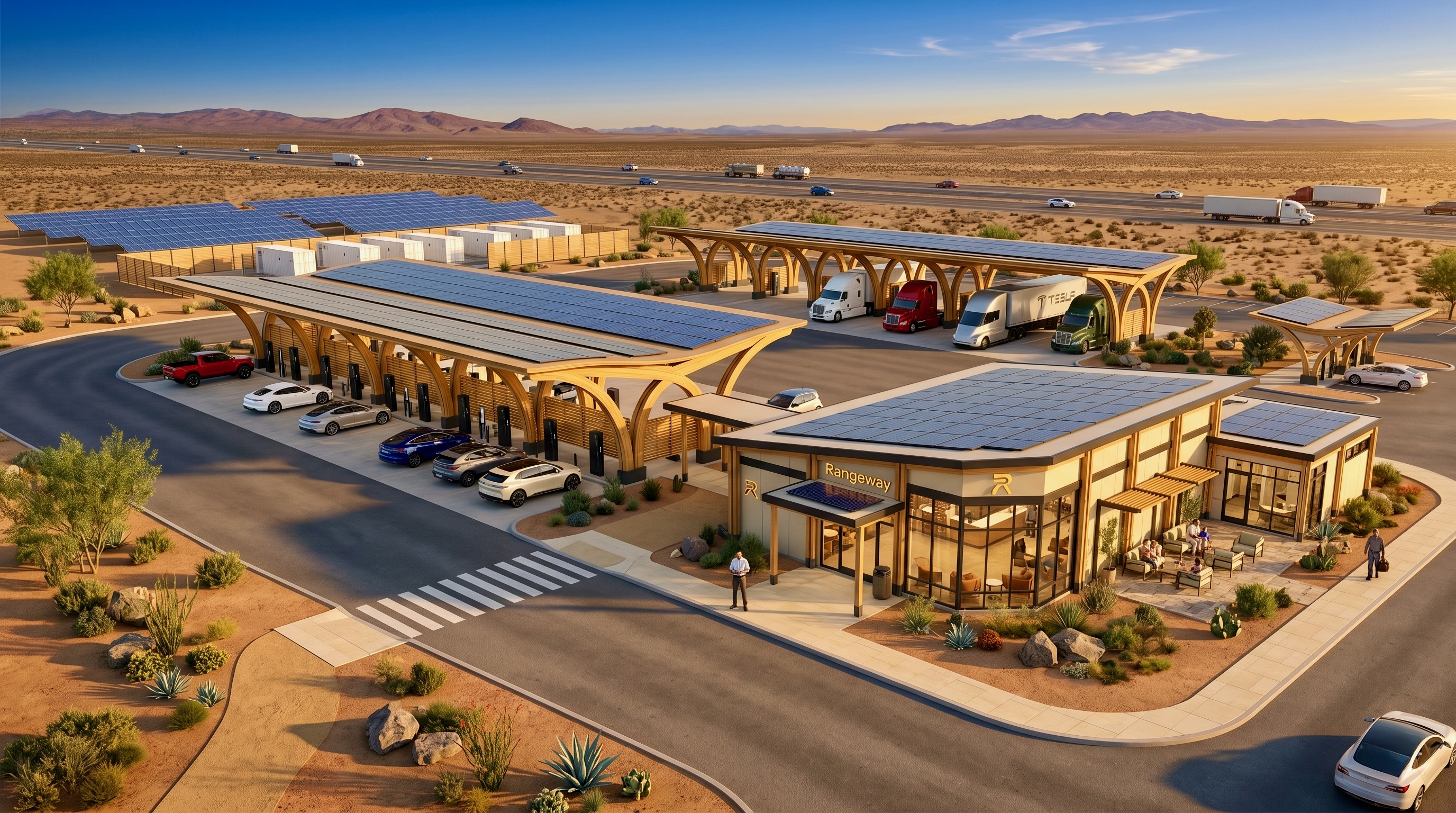
Start with the parcel. A site designed for ten passenger vehicles in a strip-mall parking lot cannot host a Class 8 tractor without a redesign. Truck ingress and egress require turning radii and parking geometry that almost no retail-scale charging site plans for. Either the site was built with commercial traffic in mind, or it wasn’t.
Then there is power. The Megawatt Charging System standard, MCS, is not an upgrade to CCS. It is a different class of infrastructure, with different cabinets, different cabling, different grid interconnects. Bringing MCS to a site is not a day-of installation. It is an architectural decision made at the feasibility stage.
Hardware is the piece of this industry people obsess over, but it is actually the easiest part to get right if you plan for it. Our approach is to design each site around the principle that one day a location may host passenger charging only, and the next day it may host both. That drives how we evaluate hardware providers, how we spec interconnects, and how we phase a build. Flexibility has to be designed in at the feasibility stage, because the alternative is a retrofit, and retrofits at corridor scale become prohibitive.
Then there is the human side of the stop, which is where most of this industry is about to get caught flat-footed.
The professional driver problem, or what hotels already know
There is an assumption baked into a lot of freight charging planning that fleet drivers need less. Less comfort. Less hospitality. Less experience. The thinking goes something like this: these are professionals, they are on the clock, all they need is a charger and a bathroom.
That assumption is wrong, and I say that as someone who spent fifteen years in hospitality before starting Rangeway. The hotel business figured this out a long time ago. The business traveler who flies Monday through Thursday, eats in the lobby restaurant, and checks into an airport property before a dawn flight is not easier to please than the leisure guest. That traveler is harder to please, because they do this every week, and the small annoyances compound over a career.
A professional trucker charging for thirty to forty-five minutes during a mandatory rest period is that same traveler. They are doing this multiple times a day. The restroom cleanliness matters more, not less. The coffee matters more. The place to sit, not on a plastic stool but in something built for a human spending real time there, matters more. The Wi-Fi that lets them finish paperwork matters more. The climate control in July and January matters more. Real food instead of wrapped plastic matters more. A quiet corner to take a call matters more. Every operator who treats them like they’re lucky to get a charger and a vending machine is building on a foundation that will not last through a decade of real competition.
I think the industry is going to learn this lesson the expensive way. A handful of operators will figure it out. The rest will spend a lot of money trying to catch up.
What it looks like when every kind of EV pulls in
Rangeway was designed for this moment, and I want to be clear that we did not design it this way by accident. The premise of the company has always been that the EV driver stopping for thirty minutes deserves the same hospitality standard as a hotel guest. Once you accept that premise, the fleet conversation gets easier, not harder. The driver’s lounge is not a passenger amenity. It is a standard that applies to anyone who steps out of the vehicle.
Here is what I think the market is still underweighting. The hospitality layer is the product. The climate-controlled driver’s lounge, the premium restrooms, the retail and food program, the staffed experience our Trailkeepers deliver: that layer can operate on top of any reliable charging infrastructure. In a freight context, that matters. Some corridor sites are best served with Rangeway as the charge point operator end to end. Others are best served with Rangeway running the hospitality experience alongside a charging partner’s infrastructure. Both are scenarios we are actively building toward.
Let me get specific about what fleet hospitality actually includes, because generalities don’t land. A long-haul driver pulling in during mandated rest is looking for what any professional on the road for days at a time wants: a dignified place to decompress. Real food, not wrapped plastic warmed under a heat lamp. Quiet seating separated from the general floor. Reclining seating for the driver who needs to close their eyes for fifteen minutes. Private zones for dispatch calls and family calls. Wi-Fi that reliably handles ELD uploads and load paperwork. Retail stocked for the things drivers actually run out of on the road, not the things a convenience store decided to merchandise. Clean restrooms with actual supplies in them. In locations where duty cycles justify it, shower facilities and laundry. None of this is revolutionary. It is what any good hotel has been doing for a century. The charging industry has just not built it.
The audience in this conversation isn’t only the driver. It is the carrier. Driver recruitment and retention are existential competitive issues in freight right now. The quality of the stops a carrier routes its drivers through is not a soft amenity. It is a recruiting tool and a retention tool. A carrier that can tell a prospective driver “we route you through stops where you’re treated like a person” has a real advantage over a carrier that cannot. That same logic applies behind the fence. On a carrier’s own yard, where the charging is private and the same drivers cycle through several times a week, a quality driver experience is arguably more acute, not less. Rangeway’s hospitality model was built to travel to that setting. The lounge, the food and beverage program, the Trailkeeper staffing, the retail approach: all of it ports. In a dedicated fleet environment it can integrate deeper with the carrier’s own operations, from dispatch displays to driver wellness programming. That is a conversation we are having with a handful of partners right now.
One more thing about the freight conversation, because it gets lost in the noise. The shippers and carriers moving toward electrification are not looking for the cheapest stop. They are looking for operational reliability. A fleet can absorb a premium on energy. What it cannot absorb is a broken charger that strands a driver for two hours and blows a delivery window. Hospitality-driven networks are, by definition, operationally obsessive. The staffing model, the predictive maintenance tooling, the driver support layer: all of it exists because we think a good experience is the product. That is exactly what a freight partner needs, whether at the charging layer, the hospitality layer, or both.
The corridor stop of the next decade
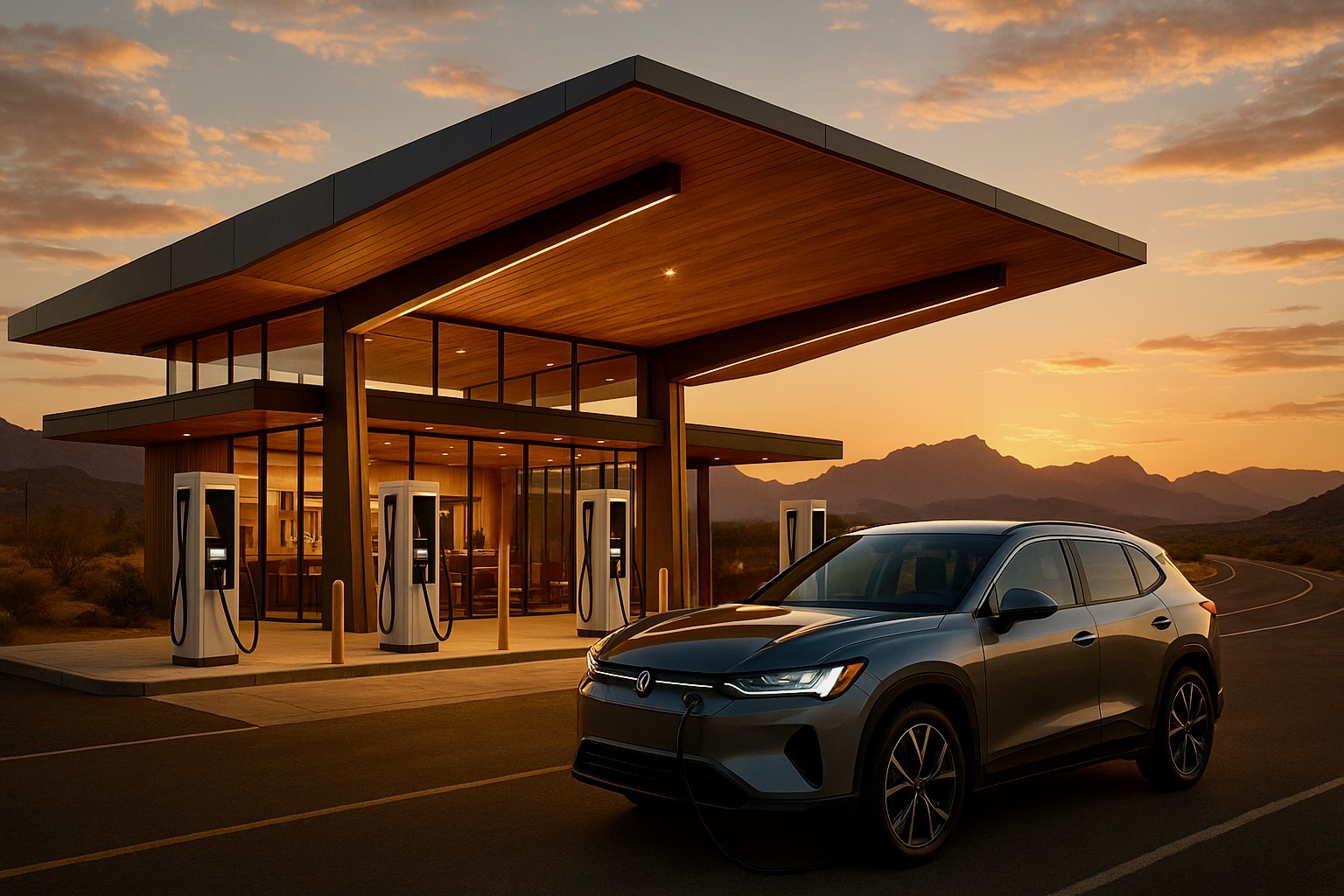
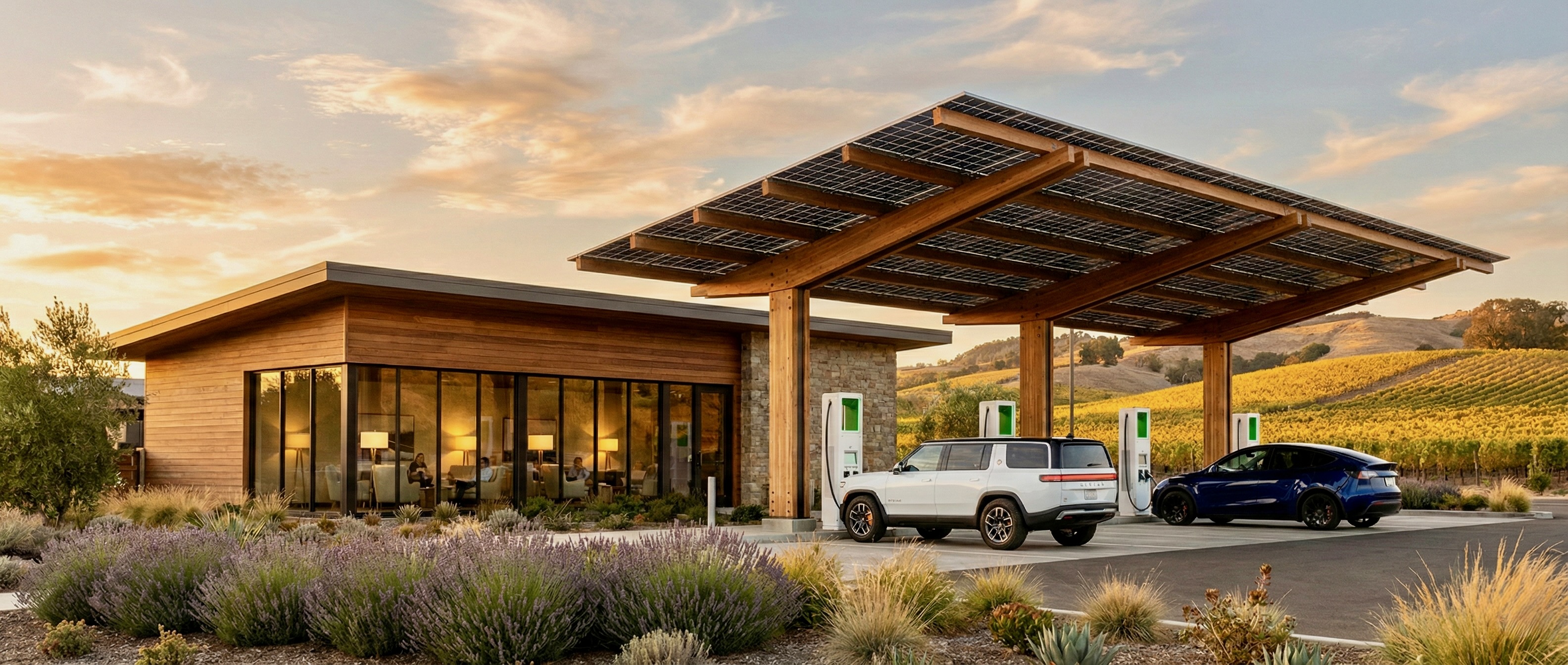
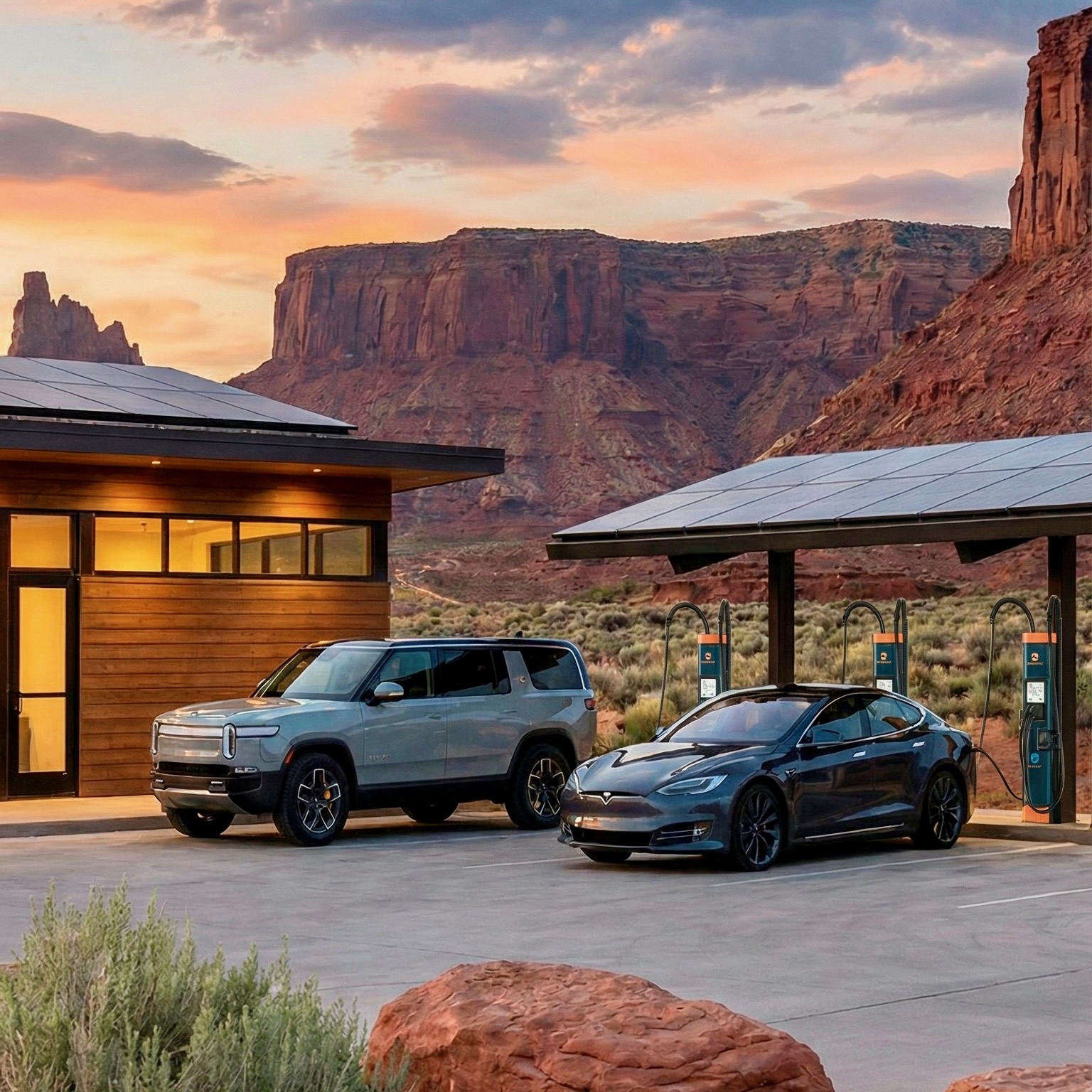
The corridor stop of the next decade is not a gas station with chargers bolted on. It is not a truck stop with a couple of EV pedestals in the back. It is a hospitality destination where every kind of electric vehicle pulls in, and every human who steps out is treated the same way. Family of four in a Rivian. Solo driver in a Taycan. Professional in an eCascadia. Same standard, same care, same reason to stop.
We are going to get there. The only real question is which networks will be ready when the traffic arrives, and which ones will be scrambling. I know which side we are building for.
If you are working on freight electrification, whether as a shipper, a carrier, a charge point operator, or an alliance coordinating the rollout, I would like to hear from you. Rangeway Fleet Relations can be reached at fleets@rangewayev.com.